



| Certifico: Informazione tecnica HSE / 25° anno / Documenti disponibili: 43.904 / Totale documenti scaricati: 31.666.919 Vedi Abbonamenti, Prodotti tecnici e Software 2025 * Dati in real-time da Aprile 2014 alla data odierna. |

| Certifico 2000/2024: Informazione Utile / Documenti disponibili: 43.904 * / Totale documenti scaricati: 31.666.919 * Vedi Abbonamenti, Prodotti e Software 2024 * Dati in real-time da Aprile 2014 alla data odierna. |

| Certifico 2000/2024: Informazione Utile / Documenti disponibili: 43.904 * / Totale documenti scaricati: 31.666.919 * Vedi Abbonamenti Promo 2023 * Dati in real-time da Aprile 2014 alla data odierna. |

| Certifico 2000/2023: Informazione Utile / Documenti disponibili: 43.904 * / Totale documenti scaricati: 31.666.919 * Vedi Abbonamenti Promo 2023 * Dati in real-time da Aprile 2014 alla data odierna. |

| Certifico 2000/2023: Informazione Utile |

| Certifico 2000/2023: Informazione Utile |

| Certifico 2000/2023: Informazione Utile Abbonamenti Promo fino al 20 Agosto - 20% ticket "CERTIFICO20" Vedi Abbonamenti Promo: 2X, 3X, 4X, Full | 2023 |

| Certifico 2000/2023: Informazione Utile Abbonamenti Promo fino al 20 Agosto - 20% ticket "CERTIFICO20" Vedi Abbonamenti Promo: 2X, 3X, 4X, Full | 2023 |

| Certifico 2000/2023: Informazione Utile / Documenti disponibili: 43.904 * / Totale documenti scaricati: 31.666.919 * Vedi Abbonamenti Promo 2023 * Dati in real-time da Aprile 2014 alla data odierna. |

| Certifico 2000/2022: Informazione Utile Tutti i Software, Prodotti e Documenti Tecnici presenti sono elaborati direttamente o selezionati su Norme Tecniche & Standards riconosciuti. Vedi Abbonamenti Promo: 2X, 3X, 4X, Full | 2022 |

| Certifico 2000/2021: Informazione Utile Tutti i Software, Prodotti e Documenti Tecnici presenti sono elaborati direttamente o selezionati su Norme Tecniche & Standards riconosciuti. Vedi Abbonamenti Promo: 2X, 3X, 4X, Full | 2021 |
|
|

Documenti
Legislazione
Direttive Sicurezza
Timeline Sicurezza IT
D.Lgs. 81/2008
Interpelli
Soggetti abilitati
ATECO / Livello rischio
Cassazione
Convenzioni ILO
TUSSL / Link


Documenti
Legislazione
Testo Unico Ambiente
Interpelli ambientali
Elenco CER
RENTRi


Documenti
Legislazione
CLP consolidato
REACH Consolidato
Seveso III
PXXX | EUH | HXXX
Elenco gas tossici
Parametri acque

Documenti
Legislazione
Norme armonizzate Click
Direttiva click
Nuovo approccio


Attività PI
D.P.R. 151/2011
Moduli PI
Codice RTO II
Norme PI 2022
Decreti PI Sett. 2021


Documenti
Legislazione
Tremcards
Etichette ADR
Kemler

Regolamento macchine
Direttiva macchine
Documenti Regolamento
Norme armonizzate
CEM4 | Software

HACCP (CE) 852/2004
MOCA (CE) 1935/2004
GMP (CE) 2023/2006
MOCA - GMP consolidato
Food Safety book

Documenti
Legislazione
DM. n. 37/2008
Legge n. 10/1991

Norme armonizzate
Direttiva click
Prassi di riferimento
| ID 2359 | | Visite: 13541 | Documenti Marcatura CE UE | Permalink: https://www.certifico.com/id/2359 |
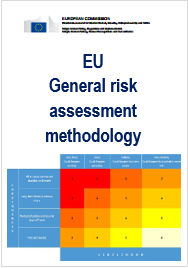
This EU general risk assessment methodology implements Article 20 of Regulation (EC) No 765/2008.
This provision obliges Member States to ensure that products which present a serious risk requiring rapid intervention, including a serious risk the effects of which are not immediate, are recalled, withdrawn or that their being made available on their market is prohibited, and that the Commission is informed without delay thereof, in accordance with Article 22.
Article 20 specifies that the decision whether or not a product represents a serious risk must ‘be based on an appropriate risk assessment which takes account of the nature of the hazard and the likelihood of its occurrence’.
Therefore the objective of this methodology is to provide guidance to authorities on when rapid intervention is needed, whether a RAPEX notification should be made and on which measures to take in relation to the non-conformity of a product (proportionality).
The methodology builds on the RAPEX Guidelines, developed within the framework of the Directive on General Product Safety (GPSD) and extends them in two respects:
1) to make sure that the broader categories of public risk protected under EU harmonization legislation can be taken into account (see section 2.2 below);
2) to reflect the specific legal requirements on harmonised products (see sections 3.1 and 3.2).
In particular the risk assessment of a harmonised product does not replace the evaluation of the compliance of the product with the requirements laid down in EU legislation and the relevant harmonised standards. Product compliance or non-compliance remains the basis on which authorities decide whether corrective action is needed.
The risk assessment of a harmonised product complements the product compliance evaluation, as it allows the assessment of how serious the possible consequences of non-compliance could be. It therefore helps to determine the most appropriate type of follow up (rapid intervention, RAPEX notification, proportionate corrective action). More details on possible corrective action depending on the level of risk are given in section 4.
The risk assessment of a harmonised product is inherently linked to the evaluation of its compliance with legal requirements.
The application of this methodology does not entitle risk assessors to make abstraction of or freely interpret the applicable legal requirements and standards, which reflect the choice of the EU legislator as to the acceptable level of product risk. The application of the proposed methodology also adds transparency to the authority’s decisions. An economic operator may be able to better understand an authority’s risk management decision if he is able to understand the risk assessment considerations made by the authority.
This methodology is intended to assist market surveillance authorities when they assess the compliance of products that are subject to Union harmonization legislation.
1. PURPOSE AND SCOPE OF APPLICATION OF THE METHODOLOGY
2. BASIC PRINCIPLES FOR A GENERAL RISK ASSESSMENT METHODOLOGY
2.1. Terminology
2.2. A generalisation of existing methodologies beyond health and safety
2.3. The relevant phases of risk assessment
3. RISK ASSESSMENT PROCESS
3.1. Step 1: Defining the Product
3.2. Step 2: Identifying the hazard(s)
3.3. Step 3: Identifying the subject at risk
3.4. Step 4: Describing how the hazard may harm the subject, i.e. the relevant harm scenario
3.5. Step 5: Determining the potential harm
3.6. Step 6: Determining the severity of harm
3.7. Step 7: Determining the probability of harm
3.8. Step 8: Determining the risk level by combining the severity of harm and the probability of that harm occurring in the scenario described
3.9. Uncertainty concerning risk assessment
4. FROM RISK TO ACTION
European Commission 2016
| Descrizione | Livello | Dimensione | Downloads | |
|---|---|---|---|---|
 |
EU general risk assessment methodology.pdf European Commission 2016 |
1011 kB | 311 |